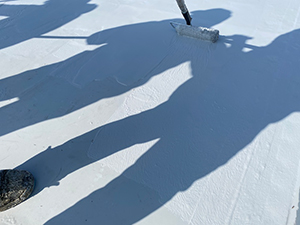
Commercial roofs in Dayton can show coating or membrane wear while the underlying roof assembly remains serviceable. A coating can be a practical way to restore performance without a full tear-off, but only when the existing roof is a sound candidate. A.H. Sturgill Roofing has been in business since 1991 and applies commercial coating systems across a range of roof types. Roof coating is a protective membrane applied over an existing commercial roof to improve waterproofing, reflect sunlight, and extend roof life without replacement.
The short answer to whether your roof qualifies: it usually does when the structure is sound, the insulation is dry, the surface can be cleaned and bonded to, and water drains properly. When any of those fail, repair or replacement comes first. Call A.H. Sturgill Roofing at (937) 254-2955 for roof coating in Dayton, OH.
Roof Coating Waterproofing and Leak Protection Benefits
One of the primary benefits of roof coating systems is improved waterproofing performance. As commercial roofs age, small surface cracks, seam fatigue, and minor punctures can develop. These issues may not immediately cause visible leaks, but they create weak points where water can slowly enter the system.
A properly specified and applied roof coating forms a continuous protective layer over a prepared surface. Before application, the scope should separately address existing leaks and damaged seams so the coating is not asked to conceal defects. For property owners in Dayton, this added protection is valuable during seasonal rainfall and storm events that place stress on older roofing systems.
A coating protects the surface, though. It does not repair what is wrong underneath it. Active leaks from failed flashing, open seams, or wet insulation need to be repaired before coating, and our commercial roof leak repair page explains how those problems are traced and fixed.
Roof Coating UV Protection and Reflectivity Advantages
Roof coatings also protect against ultraviolet exposure, which is one of the leading causes of roof surface breakdown over time. In Dayton, commercial roofs are exposed to long periods of sun and temperature fluctuation, which can cause membranes to dry out, fade, or become brittle.
Reflective coating systems help reduce heat absorption by reflecting a portion of solar energy away from the roof surface. This lowers surface temperatures and reduces the expansion and contraction cycles that contribute to material fatigue. Energy savings depend on the building, its insulation, and how its cooling system is used, so reflectivity is best treated as a benefit to the roof first and a possible utility benefit second.

Acrylic coatings are often used for reflectivity-focused applications, particularly on roofs where persistent ponding is not a major concern. Silicone coatings also resist prolonged moisture exposure in ways that may suit some ponding-prone conditions, subject to the selected product specifications. Neither coating corrects inadequate slope, blocked drainage, or structural deflection.
Is Your Roof a Sound Candidate for Coating?
Not every roof should be coated. The table below shows what to check and what each finding usually means.
| Condition | What to check | What it usually means |
|---|---|---|
| Moisture | Whether insulation under the membrane is wet, and how far the moisture extends | Small wet areas can be cut out and replaced before coating. Saturated insulation across a large area points to replacement. |
| Adhesion and surface | Whether the surface can be cleaned and whether a coating will bond to it, including any earlier coatings | A stable, prepared surface may be suitable after adhesion testing. Loose, blistered or flaking material needs corrective work before coating. |
| Substrate and deck | Soft spots, rusted metal, or deck movement | Rotten or failing decking is not corrected by coating and has to be repaired or replaced. |
| Drainage | Standing water that remains for long periods after rain, and the condition of drains and scuppers | Coating does not fix a drainage defect. Certain silicone systems can tolerate ponding, but the cause, substrate and drainage requirements still need evaluation. |
| Compatibility | The existing roof type and what is already on it, such as TPO, EPDM, PVC, metal, or modified bitumen | Coating choice and primer needs depend on the surface, so the system must be matched to the roof. |
If these checks support coating, the scope should document what needs repair before application and what remains excluded. Restoration may then be a suitable option. Our roof restoration page compares restoration with replacement, and this article focuses on whether your roof is ready for the coating itself. A roof inspection, which you can learn about on our roof inspection service page, is how these conditions get confirmed.
Roof Coating System Compatibility and Application Process
Roof coating systems are designed to work over a variety of commercial roofing types, including TPO, EPDM, PVC, metal, modified bitumen, and built-up roofing systems. The key requirement is that the existing roof must be structurally sound and properly prepared before application.
Surface preparation is a critical step. A typical project moves through these stages:
- Clean the roof so dirt, mildew, and loose material do not interfere with bonding.
- Repair seams, flashings, punctures, and other damage, and address any wet insulation.
- Prime where the surface requires it, then apply the coating in the specified layers.
- Check the finished surface for full coverage, edges, and details around penetrations.
Without proper preparation, coating performance can be reduced and lifespan may be shortened. Once applied, the coating cures into a seamless protective layer that moves with the roof as it expands and contracts. The contractor should document specified coverage rates or cured thickness, repairs at seams and penetrations, and the final surface condition. A follow-up inspection after the first season can help identify changes needing attention.
Roof Coating Lifespan and Recoatability
Roof coating systems are valued not only for their initial performance but also for their ability to be renewed. Service life varies with the coating type, the thickness applied, the condition of the roof, weather exposure, and maintenance, so no single number fits every roof. Ask for any written warranty terms before work begins.
Some systems can be recoated when their protective layer ages, provided inspection supports a compatible renewal. Instead of replacing the entire roof, building owners may restore protective performance by cleaning the surface and installing a new coating layer, provided the roof underneath is still sound. This can create a repeatable cycle that extends the usefulness of the underlying roof system.
For property managers, recoatability can turn roofing into a long term maintenance strategy rather than a one-time replacement event, with regular roof maintenance in Dayton keeping small problems from growing.
Long Term Value and Building Protection
For commercial buildings in Dayton, roof coatings can offer a practical balance between performance, cost control, and lifecycle extension. They improve waterproofing, reduce UV damage, and provide a renewable protective layer that can delay full roof replacement while the building keeps operating.
When applied correctly and maintained over time, coating systems can extend the usable life of a sound roof and support more predictable capital planning. If you are still weighing the question, our article Is a Commercial Roof Coating Worth It? covers the broader trade-offs.
For roof coating in Dayton, OH, contact A.H. Sturgill Roofing at (937) 254-2955 to discuss a roof assessment.
Frequently Asked Questions
What is the difference between acrylic and silicone roof coatings for a commercial building?
Acrylic coatings are typically reflective and suit roofs with good drainage. Silicone coatings handle ponding water better because they resist continuous moisture exposure.
Can a roof coating be applied over any type of existing commercial roof?
No. Coatings can go over many systems, such as TPO, EPDM, PVC, metal, and modified bitumen, but only if the roof is sound, dry, and clean enough to bond. An inspection confirms compatibility and surface condition.
When is coating the wrong choice?
When the insulation is saturated, the decking is rotten, or the roof has a drainage defect. Coating does not correct those problems, so they have to be repaired or the roof replaced.
How long does a commercial roof coating last, and can it be recoated?
It varies with the coating, its thickness, roof condition, and exposure. Many coatings can be recoated at the end of their service life if the roof underneath is still sound.