Commercial property owners in Dayton are constantly looking for ways to control operating costs while protecting their buildings from weather-related wear. Roofing plays a significant role in both building performance and energy consumption, particularly for structures with large flat or low-slope roof systems. TPO roofing is a popular choice among commercial building owners for its reflective surface and heat-welded seams. Whether it is the right choice for a particular building depends on the roof and how it is used, not on the headline benefits alone.
The short answer is that TPO suits many low-slope commercial roofs with sound substrates, workable drainage, and well-planned details, while roofs with standing water, heavy rooftop traffic, or unusual exposures need a closer look first. Call A.H. Sturgill Roofing at (937) 254-2955 for TPO roofing in Dayton, OH.
How TPO Roofing Improves Energy Efficiency
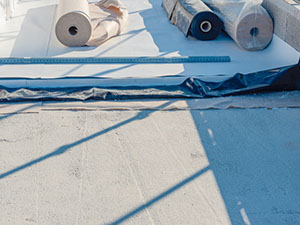
TPO, which stands for thermoplastic polyolefin, is a single-ply roofing membrane commonly used on commercial buildings. One of its most recognized features is its reflective surface. Rather than absorbing large amounts of solar heat, the membrane reflects sunlight away from the building.
This reflective quality can help reduce rooftop temperatures during Dayton’s warmer months. When less heat enters the building through the roof, cooling systems often operate more efficiently. As a result, property owners may see lower cooling energy use, though how much depends on the building.
For buildings with expansive roof areas, a reflective surface can make a noticeable difference in rooftop temperature. Actual savings are not guaranteed. They depend on the insulation under the membrane, air leakage, the HVAC equipment, how the building is used, and the heating season, since a reflective roof gives up some winter heat gain.
TPO Roofing and Reduced Cooling Loads
Cooling loads refer to the amount of work required from HVAC systems to maintain comfortable indoor temperatures. During summer months, heat absorbed through the roof can increase the demand placed on air conditioning equipment.
A reflective TPO surface can help reduce this burden by limiting heat transfer into the building. The membrane’s reflective surface helps keep rooftop temperatures lower, which can contribute to a more stable interior environment.
Lower cooling demands may reduce operating hours in some buildings, but reduced equipment wear is not assured. Because insulation level, air leaks around the roof edge and penetrations, and equipment efficiency all affect the result, an honest estimate is specific to the project and not a universal number.
TPO Performance in Dayton’s Climate
Dayton experiences a variety of weather conditions throughout the year, including hot summers, cold winters, rain, snow, and seasonal temperature fluctuations. Commercial roofing systems must be capable of performing consistently despite these changing conditions.
TPO systems are designed to accommodate seasonal temperature changes when attachment, seams and details are specified for the building.
Properly installed TPO membranes create a continuous waterproof barrier, and that depends heavily on seam quality and flashing details.
Another benefit is the membrane’s resistance to ultraviolet exposure. Long-term sun exposure can gradually deteriorate some roofing materials, but TPO is formulated to resist UV exposure, though its performance still varies by product and by how well the roof is maintained.
Long-Term Value Beyond Energy Savings

Energy efficiency is often the primary reason commercial property owners consider TPO roofing, but the benefits extend beyond utility costs. The membrane offers weather resistance and reasonable maintenance requirements when properly installed and maintained.
Heat-welded seams are another feature that contributes to long-term performance. These seams are fused with heat during installation, so the quality of the welding matters. Seams should be checked as part of the installation, and they are also a place where inspections and repairs focus later.
Routine inspections and maintenance remain important for maximizing roof lifespan. Addressing minor concerns early can help prevent larger issues and support consistent performance throughout the life of the roofing system.
Our roof maintenance in Dayton page explains how upkeep can be planned around inspection findings.
Is TPO Right for This Building?
Before choosing TPO, it helps to check the building against a few practical factors. The table below shows what to look at and why each one matters.
| Factor | What to check | Why it matters for TPO |
|---|---|---|
| Substrate condition | Whether the existing deck or roof is dry, sound, and clean, and whether it is a tear-off or a recover | TPO is only as good as what is under it. Wet insulation or a weak deck has to be corrected first. |
| Drainage | Slope, drains, scuppers, and any areas where water stands after rain | Persistent ponding calls for review of drainage design and product conditions; a membrane does not correct underlying slope or drain problems. |
| Attachment | Whether the specified assembly calls for mechanical attachment or adhesion, including deck and wind-uplift requirements | Attachment affects wind performance, the deck it can go over, and how the roof is repaired later. |
| Insulation | Type, thickness, and condition of the insulation under the membrane | Insulation, not the membrane alone, controls most heat flow, and it is a big part of the energy picture. |
| Rooftop activity | How often crews reach rooftop units, and whether there is regular foot traffic | Heavy traffic may call for walkway pads, and some exhaust or grease exposure needs a membrane review. |
| Detailing | Flashings at walls, curbs, drains, and penetrations | Leaks can develop at details, so the plan should show how each one is flashed and sealed. |
| Service access | How equipment will be reached for service without damaging the roof | Planned access routes protect the membrane over the life of the building. |
TPO is not the only single-ply option. EPDM is a rubber membrane with different seam methods, and our EPDM roofing page covers how it compares. For an overview of membrane choices, see our single-ply roofing page and our low slope roofing page.
Ask the contractor to confirm several things in writing: how the existing roof and deck were evaluated, the attachment method and insulation, how seams will be welded and checked, how each penetration and edge will be flashed, and how future repairs will be made. TPO seams can be repaired with compatible materials and methods, but the repair has to match the membrane that is already there, so keep records of the product installed. A roof inspection is how conditions on an existing roof get documented before a system is chosen.
TPO Roofing Solutions for Dayton Commercial Buildings
Commercial roofing decisions affect operating costs, energy performance, and long-term building protection. TPO can offer a reflective, weather-resistant solution for many Dayton commercial buildings when the roof, the details, and the installation plan line up. Taking time to check those items first is what turns a good product into a good roof.
For TPO roofing in Dayton, OH, contact A.H. Sturgill Roofing at (937) 254-2955 today.
Frequently Asked Questions
How does a TPO roof help reduce energy costs for a commercial building?
Its reflective surface can lower rooftop heat and cooling demand in summer. Savings vary with insulation, air leakage, HVAC equipment, and building use, so they are not guaranteed.
How long does a TPO roof last, and what affects its lifespan?
There is no single number. Installation quality, seam and flashing work, drainage, weather exposure, rooftop traffic, and maintenance all affect it. Ask for any written warranty terms before work begins.
Is TPO a good choice for flat roofs with rooftop HVAC equipment?
It can be, when curbs, penetrations, and walkways are detailed properly and equipment access is planned. Frequent traffic or exhaust exposure should be reviewed first.
What should a contractor confirm before installing TPO?
The condition of the existing roof and deck, drainage, attachment method, insulation, seam welding and checks, and how flashings and future repairs will be handled.