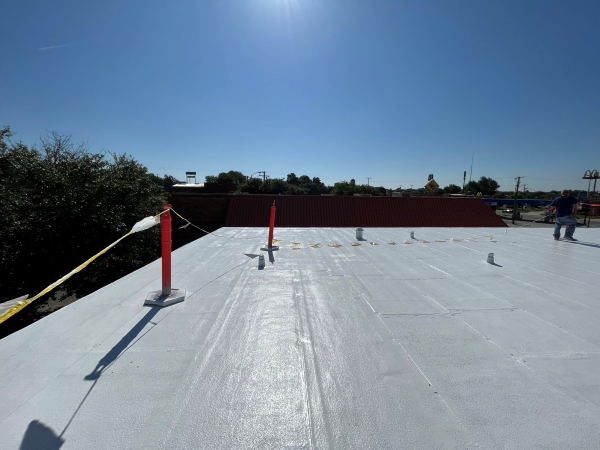
A commercial roofing strategy for a building in Mason, OH should start before the next leak or urgent repair. Property owners do not need to diagnose the roof themselves, but they should know its current condition, what kinds of findings would support repair, restoration, or replacement, and how inspection and maintenance records will guide future decisions.
A.H. Sturgill Roofing provides commercial and industrial roofing services in Ohio, including inspections, repairs, restoration systems, low-slope roofing, and roof asset management. Building owners can call (937) 254-2955 to discuss a condition-based roofing plan for a specific facility.
Start With a Documented Roof Baseline
The first step is establishing what is on the roof today. A documented roof inspection should identify the roof system, visible membrane or surface condition, seams, flashing, penetrations, drainage, prior repairs, rooftop equipment, and any known leak history.
Photos and written findings create a baseline that can be compared with later inspections. That makes it easier to see whether one area is stable, deteriorating, or developing a recurring problem instead of treating every new symptom as an isolated event.
Repair When the Problem Is Localized

A targeted repair may make sense when the defect is limited to a defined area and the surrounding roof remains suitable for repair. Examples can include a failed seam, a localized puncture, damaged flashing, a limited leak source, or another repairable detail.
The contractor should still check nearby conditions and explain what the repair is intended to accomplish. A localized scope should not be mistaken for a complete roof restoration, and repeated failures in separate areas may justify a broader evaluation.
Consider Restoration or Coating When the Roof Is Still a Suitable Base
Restoration or coating may be appropriate when the existing roof remains stable enough to stay in place but has surface wear, localized defects, or other conditions that can be corrected before the restoration system is installed.
Suitability depends on the existing roof, moisture conditions, drainage, substrate condition, adhesion, repairs, and the selected restoration system. Coating should not be used to hide widespread trapped moisture, unstable materials, deteriorated decking, or drainage problems that need separate correction.
Replacement Should Follow the Condition Evidence
Replacement deserves consideration when deterioration is too widespread for a reasonable repair or restoration scope, when moisture or deck damage affects larger areas, or when repeated repairs no longer produce a reliable result.
Roof age by itself does not determine the answer. A newer roof can have serious damage, while an older roof may still have serviceable areas. The decision should connect the recommended scope to documented roof condition rather than to an assumed service-life cutoff.
Build Inspection Frequency Around the Roof’s Risk
There is no universal twice-a-year schedule that fits every commercial roof. System type, age, condition, warranty terms, rooftop traffic, drainage history, previous leaks, severe weather, and the building’s operational importance can all affect how often the roof should be reviewed.
The inspection schedule should change when the roof condition changes. A roof with recurring drainage or leak concerns may need more frequent follow-up than a stable roof with few service issues.
Use Roof Asset Management for Multi-Year Planning
A.H. Sturgill Roofing’s Roof Asset Management program is built around documenting current roof conditions, identifying immediate needs, planning maintenance or restoration, and budgeting for future replacement.
That kind of record can help owners separate routine annual needs from larger capital projects. A useful plan should track inspection findings, completed repairs, unresolved concerns, recommended follow-up, and the assumptions behind future budget estimates.
Know What Roofing System You Have
Planning is easier when the owner knows the existing roof system, approximate installation period, insulation configuration, drainage layout, and any available warranty information. Those details affect how repairs, restoration, and replacement are evaluated.
Sturgill’s low-slope roofing overview describes common commercial systems including TPO, PVC, EPDM, asphalt, and modified asphalt. The actual roof should still be verified rather than identified from appearance alone.
Keep Maintenance and Capital Planning Separate
Routine inspection and maintenance budgets can cover predictable work such as inspections, minor repairs, and drainage-related upkeep. Larger restoration or replacement projects should be planned separately because their timing and cost depend on roof condition, access, system design, and project scope.
This avoids the assumption that regular maintenance will always eliminate emergency repairs or that every repair dollar postpones replacement by a predictable amount. Maintenance improves information and supports timely action, but it does not guarantee a fixed financial return.
Commercial Roofing Strategy in Mason, OH
For a Mason property owner, a practical roofing strategy should answer four questions: what condition is the roof in now, what findings would support repair versus restoration or replacement, what inspection and maintenance schedule fits the risk, and what larger roofing costs should be planned for over time.
Call A.H. Sturgill Roofing at (937) 254-2955 to discuss an inspection and commercial roofing plan for your Mason building.
Frequently Asked Questions
How do I know whether my roof needs repair, coating, or replacement?
The answer depends on the extent of damage, moisture conditions, substrate condition, repair history, drainage, and whether the existing roof remains suitable for repair or restoration.
How often should a commercial roof be inspected?
There is no universal schedule. Roof type, age, condition, warranty terms, rooftop traffic, drainage history, severe weather, and prior leaks should guide inspection frequency.
Can a roof coating replace the need for replacement?
Sometimes coating can restore a suitable existing roof, but it is not appropriate over widespread moisture, unstable materials, serious deck damage, or unresolved drainage problems.
What should a commercial roof maintenance plan track?
Track inspection findings, photos, repair history, unresolved concerns, drainage issues, warranty requirements, follow-up dates, and separate budgets for routine work and larger capital projects.