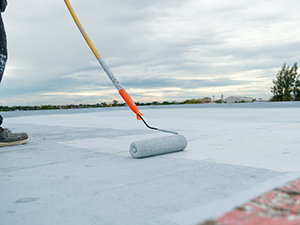
Commercial property owners in Dayton often reach a point where an aging roof shows wear but still has usable structure beneath the surface. At that stage, replacing the entire system is not always the only option, especially when budgets and building operations need to stay stable. A.H. Sturgill Roofing brings over 35 years of experience helping building managers evaluate restoration systems as a cost-conscious alternative to replacement. Roof restoration is a process that repairs and renews an existing commercial roofing system to extend its service life without full tear-off and replacement.
For more information, read our guide to EPDM roofing in Dayton.
Call A.H. Sturgill Roofing at (937) 254-2955 for roof restoration in Dayton, OH.
Roof Restoration Cost Savings Compared to Replacement
For many commercial buildings in Dayton, roof restoration offers a significantly lower upfront cost compared to full replacement. A full tear-off requires removing existing materials, repairing or replacing insulation layers, and installing an entirely new system. This process is labor intensive and often disrupts building operations.
Roof restoration avoids much of that disruption by working with the existing roof structure. Instead of removing the system, contractors repair worn areas and apply protective restoration layers that renew waterproofing performance. This approach allows building owners to address aging conditions while delaying a major capital expense.
In many cases, restoration can cost a fraction of replacement, which allows property managers to allocate budget toward other facility needs while still improving roof performance.
System Eligibility and Roof Types

Not every roof is a candidate for restoration, but many commercial systems qualify if the underlying structure is still sound. Common candidates include TPO, EPDM, PVC, modified bitumen, and built-up roofing systems. These roofs often develop surface aging before they reach structural failure.
The key factor is whether the roof is still dry and stable beneath the surface. If insulation is not saturated and the deck remains in good condition, restoration can typically proceed. In contrast, roofs with widespread wet insulation or structural damage usually require replacement.
A professional evaluation is essential because it determines whether restoration will provide meaningful long term value or if it would only delay necessary replacement.
Performance and Service Life Extension
Roof restoration systems are designed to extend the usable life of an existing roof by improving waterproofing and surface protection. This is typically achieved through coatings and restoration membranes that seal small vulnerabilities and protect against further wear.
Acrylic and silicone systems are commonly used in commercial restoration work. Acrylic coatings are often selected for reflective properties that help reduce heat absorption, while silicone systems are valued for their strong resistance to ponding water. Both options create a protective layer that reduces stress on the original roof membrane.
When properly installed, a restored roof can often gain 10 to 20 additional years of service life depending on conditions and maintenance practices. This makes restoration a practical strategy for buildings that are not ready for full replacement but need improved performance.
ROI and Long Term Financial Planning
The financial benefit of roof restoration extends beyond initial cost savings. By delaying full replacement, building owners can defer large capital expenditures and plan roofing investments more strategically. This helps smooth out long term maintenance budgets and reduce unexpected financial pressure.
Another factor in ROI is lifecycle extension. If a roof can be restored more than once over its lifespan, the total time before full replacement may be extended significantly. This is particularly relevant for systems that can be recoated at the end of their warranty period, renewing protection without restarting the roofing lifecycle entirely.
For property managers, this approach shifts roofing from a large one-time expense into a managed maintenance cycle that aligns with long term asset planning.
Roof Restoration: Long Term Asset Protection
Roof restoration provides Dayton building owners with a practical way to protect existing roofing assets while controlling costs and maintaining building performance. When the underlying roof is still viable, restoration can deliver meaningful service life extension without the disruption of full replacement.
For Roof restoration in Dayton, OH contact A.H. Sturgill Roofing at (937) 254-2955 today.
FAQ
How much can roof restoration save compared to a full commercial roof replacement?
Roof restoration can often cost significantly less than full replacement, sometimes reducing expenses by a large margin depending on roof condition. Savings come from avoiding tear-off, insulation replacement, and full system reinstallation while still improving performance.
What types of commercial roofs are good candidates for restoration?
Roofs made of TPO, EPDM, PVC, modified bitumen, and built-up systems are often good candidates if the structure is still sound. The roof should not have widespread wet insulation or major structural damage for restoration to be effective.
How long does a restored commercial roof last before it needs to be redone?
A restored roof typically lasts 10 to 20 years depending on system type, installation quality, and maintenance. Some systems can be recoated at the end of their warranty period to extend performance even further.