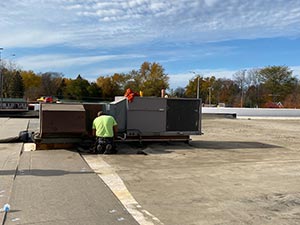
A commercial roof installation in Tipp City, OH goes best when the major decisions are made before work begins: what condition the existing roof and deck are in, which system suits the building, how the details will be built and what the finished job must show before it is accepted. Commercial roof installation by A.H. Sturgill Roofing starts with that planning, and this page walks through the decisions and acceptance checks a building owner should expect to cover.
Installation planning is different from repairing a leak or deciding whether an old roof must be replaced, and this page assumes a roof is being installed. For a flat or low-slope project, see our low-slope roofing service page. Our article on roofing management in Tipp City covers planning for ongoing performance after the roof is in place. To discuss a building, call (937) 254-2955.
Commercial Roof Installation for Reliable Building Protection

A well installed commercial roof is the first line of defense against weather, moisture and environmental stress. Some premature problems can trace back to a decision that was skipped or rushed, such as installing over a wet substrate, choosing a system that did not suit the building or leaving flashing details undefined. The sections below follow a project in the order the decisions come up.
Start With the Existing Conditions
Before material is chosen, the crew should document what is on the building now. That includes the type and number of existing roof layers, areas of wet or deteriorated insulation, the condition of the deck, how water drains, and what is mounted on the roof, such as equipment, vents and curbs. These findings decide whether the old roofing is removed, whether an overlay is realistic and how much deck or insulation work should be expected.
Structural suitability belongs in this step as well. The deck must be able to hold the new system and accept its attachment method, and the building must be able to carry the weight of the roof, any equipment and any added insulation. If the findings point to a structural or moisture problem, it is better to learn that during planning than after the first sheets are rolled out.
Choose a System That Fits the Building
TPO, EPDM, modified bitumen and metal roofing are common commercial options, and each has a place. The right choice depends on the roof slope, the deck, the exposure on and around the building, energy goals and budget. The table below summarizes where each option often fits and what should be planned for it.
| System | Where It Often Fits | Planning Notes |
|---|---|---|
| TPO | Flat and low-slope roofs where a light, heat-welded membrane suits the building | Seams, flashing and compatibility with insulation and cover board should be settled up front |
| EPDM | Flat and low-slope roofs where a rubber membrane is preferred | Seam and flashing methods differ from heat-welded systems, so details need to be specified |
| Modified bitumen | Low-slope roofs where a layered, asphalt-based system is preferred | Application method, fire safety and seam laps are part of the plan |
| Metal roofing | Buildings with enough slope and a structure that can support the panels | Panel profile, fastening, trim and expansion details should be defined before ordering |
Reflective membranes and added insulation can help regulate indoor temperatures and reduce the load on heating and cooling equipment, so energy goals are worth stating at the start. Our TPO roofing page and single-ply roofing page explain how single-ply systems are evaluated, and the same questions apply in Tipp City.
Check Material Compatibility
A roof is a stack of layers, and the layers have to work together. Insulation, cover board, adhesives, membrane, fasteners and flashing materials should be compatible with one another and with anything that stays in place from the old roof. Incompatible products can fail to bond, break down early or compromise assembly performance. Asking for the material list and the reason for each component is a reasonable request.
Define Attachment and Flashing Details
Attachment and flashing decide how the roof handles wind, movement and water at its weakest points. The plan should state how the system will be attached, such as mechanically fastened, adhered or ballasted, and how the roof will be sealed at walls, curbs, drains, penetrations and edges. These details are common locations for leaks, so they should be specified rather than left to be worked out on the roof. Drainage deserves the same attention, because low spots and clogged or poorly placed drains can shorten the life of any flat roof.
Plan Access, Safety and Weather
Installation affects a working building. Owners and the crew should agree on where materials will be staged, how workers reach the roof, how tenants and customers are kept safe and what protection is needed for rooftop equipment and the interior. Ohio weather makes scheduling a real decision, since cold, wet or windy conditions can limit adhesives, sealants and welding. A good plan includes how work will be protected if weather turns and when the roof will be dried in at the end of each day.
Set Inspection Checkpoints
Acceptance checks work best when they are agreed before the project starts. The table below lists checkpoints that fit most installations.
| Stage | What to Confirm |
|---|---|
| Before tear-off or overlay | Existing conditions are documented, and the plan states whether old roofing is removed or covered |
| After deck preparation | Damaged or wet deck and insulation are corrected before new material goes down |
| During installation | Attachment method, seam work and flashing at walls, curbs, drains and penetrations match the plan |
| Before closeout | Roof is walked and reviewed, debris is cleared and any open items are listed in writing |
| At handoff | Material information, warranty terms and care instructions are provided in writing |
The crew’s quality workmanship shows most at these checkpoints, and our commercial roof inspections page explains how a condition review is handled once the roof is in service.
Understand the Warranty Scope
Before signing, ask for warranty terms in writing. Useful questions include what the warranty covers, what it excludes, how long it lasts, whether it covers materials, workmanship or both, and what the owner must do to keep it in force, such as regular inspection or limits on rooftop traffic. A warranty is only as useful as its stated scope, so read it before work begins rather than after a problem appears.
Keep Installation Separate From Repair and Replacement Questions
Installation planning answers how a new roof will be built. A different set of questions applies when a roof is leaking and the owner is deciding between repair and replacement, and those questions deserve their own assessment. If you are still deciding whether the existing roof can be saved, ask for a condition review first. Once replacement is the plan, the decisions above apply.
Long Term Durability and Maintenance Support
Even a well installed roof needs attention over time. Regular inspection of seams, flashing and drains, and clearing debris after storms, help catch small problems early. A.H. Sturgill Roofing offers ongoing support and maintenance services to help businesses keep their roofing systems in good condition and avoid unexpected repairs. Keeping the installation records, including material information and warranty paperwork, makes future maintenance and repairs easier.
Commercial Roof Installation Services
For a Tipp City installation, a written plan can make project coordination and final acceptance clearer for the owner and roofing contractor. If your property requires commercial roof installation in Tipp City, OH, call (937) 254-2955 to schedule a consultation and begin planning your roofing project.
FAQ
What types of commercial roofing systems are available?
Common options include TPO, EPDM, modified bitumen and metal roofing. The right one depends on the roof slope, deck, exposure, energy goals and budget.
How long does commercial roof installation take?
It depends on the size and complexity of the building, the amount of deck or insulation work and the weather. Ask for a written schedule that explains how the work will be sequenced and protected.
Why is professional installation important?
Proper installation supports durability, helps prevent leaks and helps the roofing system perform as intended over time, especially at seams, flashing and drains.
What should I ask before approving an installation plan?
Ask about the existing conditions found, the system and materials chosen, how attachment and flashing will be handled, the inspection checkpoints and the warranty terms in writing.