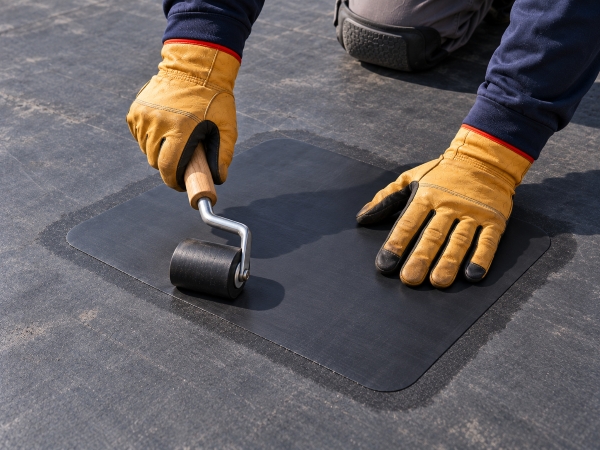
EPDM roof repair in Dayton, OH can address many localized seam, flashing, penetration, and puncture problems when the surrounding roof remains serviceable. The right repair depends on the condition of the membrane, the location of the defect, moisture conditions, and the compatibility requirements of the installed EPDM system.
A.H. Sturgill Roofing has served commercial building owners since 1991 and works with single-ply roofing systems including EPDM. This article explains common EPDM repair situations, what limits a localized repair, and when broader investigation may be needed before another patch is approved.
Common EPDM Problems and Typical Repair Approaches
EPDM is a synthetic rubber membrane used on flat and low-slope commercial roofs. Problems often develop at seams, penetrations, flashing transitions, edges, or isolated damaged areas. The exact repair method should follow the installed system and compatible materials rather than one universal recipe.
| Condition | Typical Repair Direction | What Can Limit a Local Repair |
|---|---|---|
| Open or lifting seam | Clean and prepare the affected area, then restore the seam using a compatible repair method for the installed EPDM system. | Repeated or widespread seam failure may indicate a broader attachment, aging, or installation issue. |
| Puncture or small tear | Prepare the damaged area and install a compatible patch or repair detail that extends beyond the defect. | Numerous punctures, brittle material, or damage around traffic areas may justify a wider assessment. |
| Failed flashing at a wall or curb | Remove or rebuild the failed detail as needed and restore it with materials compatible with the existing roof system. | Damaged curbs, walls, substrate, or repeated movement may need correction before the flashing repair can be finalized. |
| Pipe or penetration leak | Repair or replace the penetration flashing detail and reconnect it properly to the surrounding membrane. | Movement, damaged components, or incompatible prior repairs may require a more complete rebuild of the detail. |
| Membrane shrinkage or edge movement | Evaluate edge securement, flashing, and terminations, then repair the affected detail where the surrounding membrane remains serviceable. | Widespread movement or repeated edge failure may indicate that isolated repairs are no longer enough. |
Surface Preparation Matters

EPDM repairs rely on clean, dry, properly prepared surfaces and materials that are compatible with the existing roof. Dirt, oxidation, residual moisture, old coatings, incompatible sealants, or poorly bonded prior repairs can affect adhesion and repair performance.
Temperature and moisture limits also depend on the specific repair materials being used. Cold or damp weather can restrict some adhesives, primers, tapes, or sealants, but that does not mean every winter repair is temporary. The contractor should follow the written requirements for the selected repair system and explain when weather affects the scope or timing.
Finding the Actual Source of the Leak
Water can enter at one roof location and appear inside the building somewhere else. That is why placing a patch directly above a ceiling stain may not solve the problem. A proper repair starts by tracing likely entry points and checking nearby seams, flashing, penetrations, edges, drains, and previous repair areas.
A.H. Sturgill Roofing’s commercial roof leak repair information for Dayton provides related guidance on leak tracing, while the company’s flat roof repair information covers broader flat-roof repair conditions.
When a Localized EPDM Repair May Be Reasonable
Localized repair is generally more appropriate when the defect is limited, the surrounding membrane remains serviceable, and the condition can be corrected without ignoring broader moisture, attachment, or substrate concerns.
| Conditions That May Support Repair | Conditions That May Need a Larger Scope |
|---|---|
| A limited number of isolated defects | New leaks appearing in several different roof areas |
| Surrounding membrane remains flexible and serviceable | Widespread brittleness, cracking, shrinkage, or loss of serviceability |
| Seams and flashing outside the repair area remain stable | Seam or flashing problems are repeated across large roof sections |
| No confirmed broad moisture condition prevents the repair | Suspected or confirmed moisture extends beyond the isolated defect and needs further investigation |
Moisture Changes the Repair Decision
Moisture under an EPDM membrane should not be assumed from an interior stain alone. If wet insulation or substrate damage is suspected, the contractor may recommend additional investigation before deciding whether a small repair is appropriate.
A.H. Sturgill Roofing provides commercial roof inspection and reporting services, and its inspection information explains how condition findings can support repair, maintenance, restoration, or replacement planning. The important distinction is between what is visibly observed and what still needs to be confirmed.
Repeated Repairs Deserve a Broader Review
A roof that keeps developing new leaks or reopening the same details should not receive another patch automatically. Repeated failures can point to broader membrane aging, seam problems, drainage conditions, attachment issues, or moisture that a localized repair does not address.
That does not mean replacement is always required. It means the next scope should be based on a wider condition assessment instead of treating each leak as an unrelated event.
Maintenance After an EPDM Repair
After a repair, keep a record of what was corrected and where. Future inspections can then compare the repaired area with surrounding seams, flashing, drains, traffic zones, and rooftop equipment areas.
Sturgill’s Dayton roof maintenance information covers ongoing roof care. Maintenance can help identify developing issues, but it does not replace a repair when an active defect already requires corrective work.
EPDM Roof Repair in Dayton, OH
A.H. Sturgill Roofing serves commercial properties throughout the Dayton area and works with EPDM as part of its single-ply commercial roofing scope. The company’s EPDM roofing page for Dayton provides additional system context for owners evaluating an existing rubber roof.
For a Dayton building with a seam problem, puncture, flashing defect, or recurring leak, the useful first step is to identify the actual defect and the condition of the surrounding roof before selecting a repair method. Contact A.H. Sturgill Roofing at (937) 254-2955 or through the company’s contact page to discuss the roof.
Frequently Asked Questions
Can a leaking EPDM roof be repaired instead of replaced?
Often, yes, when the problem is localized and the surrounding membrane remains serviceable. The repair decision should also account for moisture, seam condition, flashing, and any repeated failures elsewhere on the roof.
Is a winter EPDM repair always temporary?
No. Whether a repair can be permanent depends on the specific materials, surface conditions, temperature, moisture, and written installation requirements for the selected repair method.
Why does my EPDM roof keep leaking after patching?
The original leak source may not have been identified, or the roof may have broader seam, flashing, drainage, moisture, or membrane conditions that isolated patches do not address.
How do I know when EPDM repair is no longer enough?
Repeated leaks in different areas, widespread seam problems, broad membrane deterioration, or moisture concerns beyond one defect are reasons to evaluate a larger repair, restoration, or replacement scope.