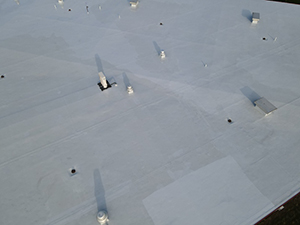
Commercial roof coating can be a practical restoration option when the existing roof is still suitable to remain in service. For an Oakwood, OH building, the decision should come from membrane condition, moisture findings, adhesion, drainage, substrate condition, and compatibility with the proposed coating system rather than from roof age or appearance alone.
A.H. Sturgill Roofing provides commercial roofing and restoration services in Oakwood. Call (937) 254-2955 to discuss whether an existing roof is a realistic coating candidate. The company’s commercial roof coating guidance also explains factors owners can consider before choosing restoration.
How Commercial Roof Coating Fits Into Restoration
A compatible coating creates a continuous protective surface over an existing roof after required repairs and preparation are completed. It may help protect the retained roof surface from ultraviolet exposure and weathering, but it does not rebuild damaged decking, dry saturated insulation, or correct the cause of recurring ponding water.
That distinction is important because coating is a restoration method, not a substitute for correcting underlying defects. Localized cracks, seams, flashing details, or penetrations may be repaired as part of preparation when the surrounding roof remains serviceable. Broader deterioration can point toward a larger repair scope or replacement instead.
Is Your Roof a Good Candidate for Coating?
A sound coating candidate should have enough serviceable roofing left to justify restoration. The inspection should document the existing roof system and identify conditions that could prevent reliable coating performance.
| Condition | Coating May Be Appropriate When | Repair or Replacement Needs More Review When |
|---|---|---|
| Moisture | The retained roof assembly is sufficiently dry and any isolated wet areas can be removed or repaired before coating. | Wet insulation is widespread, moisture extent is uncertain, or the roof cannot be dried and repaired within a defined restoration scope. |
| Adhesion | The surface can be cleaned and prepared to meet the selected coating system’s adhesion requirements. | Contamination, weathering, prior materials, or surface conditions prevent reliable bonding without additional corrective work. |
| Substrate condition | The membrane, insulation, and deck that will remain are serviceable after required localized repairs. | Decking is deteriorated, membrane failure is extensive, or supporting materials require broad removal. |
| Drainage | The roof drains as intended and any correctable drainage issues are addressed before application. | Recurring ponding is caused by slope, settlement, blocked drainage, or another defect the coating itself will not correct. |
| Compatibility | The proposed coating, primer, repair materials, and existing roof surface are compatible. | The existing membrane, prior coating, sealants, or repair materials create an unresolved compatibility question. |
Preparation Comes Before Coating

A coating project should begin with repairs and surface preparation, not immediate application. Depending on the roof, preparation can include cleaning, removal of loose or incompatible material, repair of seams and flashing, treatment of penetrations, and primers or adhesion checks required by the selected system.
The contractor should also identify which areas are excluded from coating until another problem is corrected. Coating over active moisture, damaged decking, unresolved drainage defects, or incompatible materials can leave the underlying issue in place.
Application, Acceptance, and Follow-Up
The written scope should identify the selected coating system, preparation requirements, application method, weather or surface limits, and any coverage or thickness requirements that apply. Those details matter more than a general promise that coating will stop leaks or extend the roof for a fixed number of years.
Final acceptance should confirm that required repairs were completed, transitions and penetrations were addressed, and the coated areas meet the project requirements. Thin, missed, damaged, or otherwise unacceptable areas should be corrected before closeout. The owner should also know what follow-up inspection or maintenance is recommended after the work.
A.H. Sturgill Roofing’s commercial roof coating article for Tipp City provides additional coating context, while the actual Oakwood proposal should control the materials, preparation, and acceptance requirements for the building being evaluated.
Coating, Repair, or Replacement?
A coating may preserve a serviceable roof when surface restoration is the main need. Localized repair may be the better choice when the issue is contained and the rest of the roof does not need restoration. Replacement deserves consideration when wet insulation, deteriorated decking, widespread membrane failure, repeated unrelated leaks, or unresolved drainage problems make the existing assembly a poor restoration candidate.
The decision should come from documented roof condition rather than a blanket claim that coating is always less expensive or that replacement is always unnecessary. A defined inspection and scope make the alternatives easier to compare.
Commercial Roof Coating Services
If you are evaluating commercial roof coating in Oakwood, OH, call A.H. Sturgill Roofing at (937) 254-2955. Ask the contractor to document moisture, adhesion, substrate condition, drainage, compatibility, required repairs, and the acceptance criteria before authorizing restoration.
Frequently Asked Questions
What is a commercial roof coating?
A commercial roof coating is a protective restoration layer applied over a compatible existing roof after the required repairs and preparation are completed.
Can a roof coating stop an active leak?
It can be part of a repair and restoration scope, but the leak source and any wet or damaged materials should be identified and addressed before coating is treated as the solution.
When is coating a poor choice?
Widespread wet insulation, deteriorated decking, extensive membrane failure, unresolved drainage problems, or incompatible materials can make coating inappropriate without additional corrective work.
What should I confirm before approving a coating project?
Confirm the roof’s moisture and substrate condition, compatibility, required repairs, preparation, application requirements, acceptance checks, and follow-up plan.