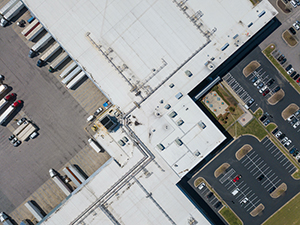
Commercial roof replacement becomes a practical option when an existing roof has widespread deterioration, repeated leaks, wet or damaged components, or repair needs that no longer stay isolated. The decision should come from documented roof conditions, not age or one leak alone.
A.H. Sturgill Roofing provides commercial roof replacement services for properties in Oakwood, OH. Call (937) 254-2955 to discuss the building, the current roof condition, and the scope that may be appropriate.
When Repair Stops Being the Right Call
Many roof problems can still be repaired when the defect is isolated and the surrounding membrane, flashing, insulation, and deck remain serviceable. Replacement deserves a closer look when problems repeat in several areas, repairs no longer hold, moisture extends beyond one repair zone, or the existing assembly has broad deterioration that makes another localized repair difficult to justify.
The next step should be an inspection that separates confirmed conditions from assumptions. A.H. Sturgill Roofing offers commercial roof inspection in Oakwood, which can help document membrane condition, drainage, flashing, moisture concerns, previous repairs, and other factors that affect the decision.

Compare Tear-Off and Recover Before Authorizing Replacement
A replacement proposal should explain whether the project is a full tear-off, a recover over an existing roof, or another approved assembly. Recover is not automatically suitable just because the existing membrane is still in place. Roof condition, moisture, deck or substrate condition, structural loading, attachment, drainage, applicable code requirements, and system requirements all matter.
| Decision point | Tear-off questions | Recover questions |
|---|---|---|
| Existing roof and deck | What will be removed, exposed, inspected, and repaired? | Is the existing assembly suitable to remain in place? |
| Moisture and insulation | How will wet or damaged materials be identified and replaced? | What evidence confirms unacceptable moisture is not being covered? |
| Drainage and flashing | How will drains, edges, penetrations, curbs, and wall details be rebuilt? | How will added thickness affect drains, flashings, edges, and transitions? |
| Project limits | What deck or insulation allowances are included if concealed damage appears? | What code, loading, attachment, and system requirements must be satisfied? |
What a Replacement Quote Should Define
A useful proposal should identify the roof area, removal or recover approach, proposed roof assembly, insulation scope, attachment method, drainage and flashing work, access plan, major exclusions, and how concealed conditions will be priced or approved. It should also state which changes require owner authorization before additional work proceeds.
If the roof still has isolated repairable defects, the owner can compare the replacement proposal with the scope of continued commercial roof repairs in Oakwood. That comparison is more useful when both options are based on the same inspection evidence instead of general assumptions about roof age.
Plan Replacement Around an Occupied Building
Commercial roof replacement can affect entrances, loading areas, parking, rooftop equipment, interior operations, and tenant access. Before work starts, the project plan should identify material staging, debris removal, roof access, protection of occupied areas, coordination around rooftop equipment, weather contingencies, and who has authority to approve field changes.
Weather planning should include how exposed areas will be protected if work pauses and how the schedule changes when conditions are unsuitable for installation. The contractor should also explain how daily cleanup, temporary protection, and communication with the property contact will be handled.
Material, Energy, and Code Considerations
The replacement system should fit the building’s roof slope, existing structure, drainage, use, budget, and long-term maintenance goals. Different commercial systems have different installation and maintenance requirements, so the proposal should explain why the selected assembly fits this building rather than relying on a one-size-fits-all recommendation.
Reflective surfaces, insulation changes, and improved air or moisture control can affect building energy performance, but a new roof does not guarantee a specific reduction in utility costs. Energy results depend on the full building envelope, HVAC system, operations, climate, and the final roof assembly.
Code requirements also depend on the actual project and jurisdiction. Permits, structural loading, insulation, drainage, attachment, fire classification, and other requirements should be addressed as applicable rather than treated as a blanket compliance claim.
Closeout Evidence Before the Project Is Complete
Final acceptance should include more than a visual walkthrough. The owner should receive documentation of approved changes, completed roof areas, outstanding follow-up items, applicable warranty documents, and any maintenance requirements tied to the installed system. Closeout photos and a clear record of concealed-condition changes can also make future maintenance and repair decisions easier.
Commercial Roof Replacement in Oakwood, OH
A sound replacement decision connects roof condition to project scope. Confirm why repair is no longer sufficient, compare tear-off and recover suitability, define allowances and exclusions, plan around building operations, and agree on closeout evidence before authorizing the work.
Contact A.H. Sturgill Roofing at (937) 254-2955 to discuss commercial roof replacement for an Oakwood property.
Frequently Asked Questions
How long does a commercial roof replacement take?
The schedule depends on roof size, removal requirements, weather, access, building operations, material availability, and the amount of concealed work discovered during the project.
How do I know whether a roof should be repaired or replaced?
Compare the extent and recurrence of defects, moisture and insulation condition, deck condition, repair history, drainage, and the amount of serviceable roofing that remains.
Is a recover always less disruptive than a tear-off?
Not necessarily. Recover can reduce removal work on a suitable roof, but moisture, structural loading, drainage, flashing heights, attachment, code requirements, and system rules may make tear-off the better approach.
Will a replacement roof automatically reduce energy costs?
No. Roofing and insulation can influence heat flow, but actual energy use also depends on HVAC performance, air leakage, building operations, climate, and the final roof assembly.