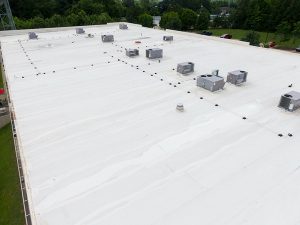
Commercial flat roof problems are not always as simple as they appear. Leaks, moisture intrusion, and membrane damage can originate far from the visible signs inside a building, making accurate diagnosis one of the most important parts of the repair process. When roofing issues are misdiagnosed, repairs may only address surface symptoms while the underlying problem continues to worsen. A.H. Sturgill Roofing provides professional commercial flat roof repair services in Oakwood, OH, helping businesses identify roofing issues accurately and avoid costly repeat repairs.
If you need commercial flat roof repair in Oakwood, OH, contact A.H. Sturgill Roofing at (937) 254-2955 to schedule a professional roof inspection and evaluation.
How Commercial Flat Roof Repair Diagnoses Go Wrong
Commercial flat roof repair diagnoses often go wrong when the visible signs of damage are treated as the actual source of the problem. Water stains inside a building rarely appear directly beneath the roof leak, because moisture can travel along insulation layers or structural decking before becoming noticeable. This leads to incorrect repair decisions that only address surface symptoms while the real entry point continues to allow water intrusion.
Another common issue is failing to account for hidden or layered damage within the roofing system. Problems such as trapped moisture, deteriorated insulation, or compromised flashing around penetrations can easily be overlooked during a basic inspection. When these underlying issues are not identified, repairs may seem successful at first but often fail again, resulting in repeated leaks and unnecessary maintenance costs over time.
Assuming the Leak Source Is Directly Above the Problem

One of the most common mistakes in flat roof diagnosis is assuming that a leak originates directly above the area where water appears inside the building. On commercial flat roofs, water can travel along insulation layers, decking, or structural components before becoming visible indoors.
Without a thorough inspection, repairs may target the wrong area, allowing the actual source of the leak to remain unresolved.
Overlooking Drainage Problems
Drainage issues are often a major contributor to flat roof damage, yet they are sometimes ignored during diagnosis. Ponding water caused by clogged drains, improper slope, or damaged scuppers can gradually weaken roofing materials and create recurring leaks.
If the underlying drainage issue is not corrected, repairs to the membrane alone may fail prematurely.
Misidentifying Membrane Damage
Flat roofing membranes can develop cracks, punctures, seam separation, or blistering over time. However, surface damage is not always the primary issue. In some cases, moisture trapped beneath the membrane may continue spreading even after visible damage is repaired.
Accurate diagnosis requires evaluating both surface conditions and what may be occurring underneath the roofing system.
Ignoring Flashing and Penetration Areas
Roof penetrations such as vents, HVAC units, skylights, and edges are common leak points on commercial flat roofs. Flashing around these areas may loosen, crack, or deteriorate due to weather exposure and thermal movement.
Focusing only on the main roof surface while ignoring flashing conditions can lead to incomplete repairs and ongoing water intrusion problems.
Failing to Detect Hidden Moisture
Moisture trapped beneath roofing materials is one of the biggest challenges in flat roof repair. Water infiltration may remain hidden inside insulation or decking long after surface drying occurs.
Without proper moisture detection methods, contractors may underestimate the extent of damage and leave compromised materials in place, increasing the risk of future failures.
Relying on Temporary Surface Repairs
Quick patch jobs are sometimes used to stop leaks temporarily, but surface level repairs often fail if the root cause is not identified. Repeated temporary repairs can actually make diagnosis more difficult by covering underlying damage patterns.
Long term repair success depends on understanding the full condition of the roofing system rather than simply sealing visible problem areas.
Weather Related Misdiagnosis
Commercial flat roof issues can change depending on weather conditions. Some leaks only appear during heavy rain, while others develop due to freeze thaw cycles or heat related expansion. Diagnosing roofing issues without considering weather patterns can lead to inaccurate conclusions.
A complete evaluation takes environmental conditions and seasonal stress into account when identifying roofing failures.
Importance of Comprehensive Roof Inspections
Accurate diagnosis begins with a detailed inspection of the entire roofing system. This includes evaluating membranes, flashing, drainage systems, seams, insulation, and structural components.
Comprehensive inspections help identify both immediate damage and underlying conditions that may contribute to future roofing problems.
Preventing Repeat Roofing Repairs
Misdiagnosed roofing problems often result in repeated repairs that increase costs over time. Correct diagnosis allows contractors to address the actual cause of failure rather than repeatedly repairing symptoms.
A proactive and detailed approach helps extend roof lifespan, improve performance, and reduce long-term maintenance expenses.
Commercial Flat Roof Repair Services
A.H. Sturgill Roofing provides professional commercial flat roof repair services focused on accurate diagnosis, detailed inspections, and long-term repair solutions. Their team works to identify the true source of roofing problems and restore commercial roofing systems with reliable repair strategies.
If you need commercial flat roof repair in Oakwood, OH, contact A.H. Sturgill Roofing at (937) 254-2955 today to schedule a professional roof assessment.
FAQ
Why are flat roof leaks difficult to diagnose?
Water can travel beneath roofing materials before becoming visible inside the building.
Can drainage issues cause recurring flat roof leaks?
Yes, poor drainage and ponding water often contribute to repeated roofing problems.
What areas are commonly overlooked during diagnosis?
Flashing, roof penetrations, hidden moisture, and drainage systems are often missed.