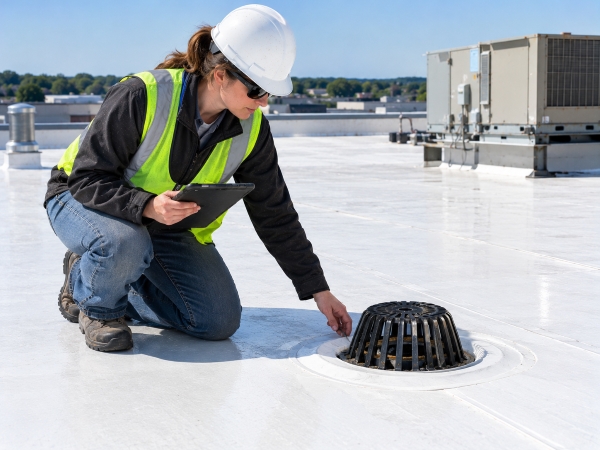
PVC roofing is a single-ply thermoplastic membrane system used on flat and low-slope commercial buildings. It may be considered where rooftop grease, oils, or certain chemical exposures are part of the design conditions, but the actual membrane choice should follow the specific exposure and system requirements. A.H. Sturgill Roofing has worked on commercial roofs since 1991 and installs single-ply systems including PVC, TPO and EPDM, and this page explains what a PVC roof is and when it is a good match for a building in Dayton, OH.
PVC is not the right choice for every roof. The decision depends on what is on and around the building, how the roof drains, what is underneath the membrane and how the roof will be used. Our single-ply roofing page for Dayton gives an overview of the membrane family, and this page focuses on PVC specifically. To discuss a building, call (937) 254-2955.
What a PVC Roof Is

A PVC roof is built from sheets of polyvinyl chloride membrane, usually reinforced with a polyester or fiberglass scrim. The sheets are installed over a prepared roof assembly, and seams are commonly joined with hot-air welding. Walls, curbs, drains, and rooftop equipment are detailed with compatible PVC materials. Attachment can vary by system and may include mechanically attached or adhered assemblies; the correct method depends on the deck, wind design, insulation, manufacturer requirements, and project scope.
Many PVC membranes are light in color and reflective. Roof-surface reflectivity can reduce solar heat absorbed at the membrane, but any effect on building energy use depends on insulation, HVAC, building use, climate, roof assembly, and other conditions.
How PVC Compares With Other Single-Ply Options
PVC, TPO, and EPDM are commonly compared as single-ply options for commercial flat roofs. They share a lot, including large sheets and a low-slope design, but they differ in how seams are made and in what they tolerate. The table below summarizes the general differences.
| PVC | TPO | EPDM |
|---|---|---|
| Heat-welded seams using a compatible TPO system using a compatible PVC system | Heat-welded seams using a compatible TPO system using a compatible PVC system | Seams usually taped or adhered |
| May be considered where specific grease, oil, or chemical exposure is compatible with the selected system | Common thermoplastic single-ply option, often light in color | Synthetic rubber single-ply membrane, commonly black |
| Needs compatible accessories and flashing | Needs compatible accessories and flashing | Needs compatible adhesives, tapes and flashing |
Our TPO roofing page for Dayton explains how that system is evaluated, and our EPDM roofing page covers the rubber membrane option. The right comparison is always based on the building rather than the product label.
When PVC Is a Good Match
PVC may be considered where rooftop grease, oils, or certain chemical exposures are relevant to the roof design. Restaurants, food-service facilities, and some industrial buildings can have exhaust or process conditions that should be reviewed against the selected membrane’s written compatibility limits. PVC can also be considered where welded membrane details are useful around penetrations, curbs, and other transitions.
On a roof without unusual exposure or detailing requirements, TPO, EPDM, PVC, or another system may each remain viable depending on the roof assembly and owner priorities. A contractor should explain the reasons for a recommendation rather than simply naming a product.
Key Points to Review Before Choosing PVC
The table below lists what a building owner should look at before settling on a PVC membrane.
| Consideration | PVC | What It Means for the Building |
|---|---|---|
| Seams | Joined with hot-air welding when surfaces, equipment settings, and membrane conditions meet system requirements | Seam quality depends on surface preparation, equipment settings, membrane condition, and installation quality |
| Exposure to grease and chemicals | May be selected where documented rooftop grease, oil, or chemical exposure fits the membrane’s compatibility requirements | Food-service and some industrial buildings may be candidates when the specific exposure is compatible with the selected membrane |
| Surface color | Often available as a light, reflective membrane | Can reduce solar heat absorbed at the roof surface compared with a darker membrane, with building impact depending on the full assembly |
| Flashing and details | Often built from compatible PVC accessories and welded in place | Walls, curbs, drains and penetrations should be planned as part of the system |
| Compatibility | Requires compatible materials and separation from incompatible substances where the system calls for it | Repairs, flashing, and overlays need compatible materials, and some assemblies require a separator or cover board |
Installation Details That Affect How a PVC Roof Performs
Before a PVC system is installed, the deck, insulation, existing roofing, moisture condition, and materials that will remain in place should be evaluated. Confirmed wet or deteriorated materials may require removal, replacement, or a different scope before installation. Drainage matters as well. Low areas, blocked drains, and other drainage conditions should be evaluated separately so the installation plan addresses how water is expected to leave the roof.
Seam welding is the other area to watch. Heat-welded seams using a compatible TPO system using a compatible PVC system are strong when the surfaces are clean and the welder is properly set up, and a careful installer checks the welds along their edges. Flashing at walls, curbs, drains, and penetrations should be detailed as part of the same compatible system because defects at transitions can become water-entry paths. A broader look at how these roofs are installed is available on our commercial roof installation page for Dayton, and our low-slope and flat roofing page explains the system types that fall under that category.
Caring for a PVC Roof
PVC roofs still need condition reviews after installation. The schedule should reflect drainage, rooftop traffic, exposure, repair history, equipment work, and any written maintenance requirements that apply to the installed system. If grease or another contaminant reaches the roof, maintenance should follow the membrane manufacturer’s cleaning and exposure guidance for the installed system. Our roof maintenance page for Dayton describes what a routine looks like, and our commercial roof inspections page explains how a condition review is handled.
When a leak does appear, the repair should use materials that are compatible with the membrane already on the roof. Repairs should use materials and methods compatible with the installed membrane, and keeping a record of the roof system and prior repairs can make future work easier to evaluate.
PVC Roofing in Dayton, OH
For commercial buildings in Dayton, OH that are being evaluated for a new single-ply roof, A.H. Sturgill Roofing can inspect the building and explain how PVC, TPO, or EPDM compares for the actual roof assembly and project conditions. Call (937) 254-2955 or contact our team.
Frequently Asked Questions
What is a PVC roof?
A PVC roof is a single-ply plastic membrane system for flat and low-slope commercial buildings. The sheets are joined with heat-welded seams and flashed at walls, curbs and penetrations.
When is PVC chosen over TPO or EPDM?
It may be considered where specific grease, oil, or chemical exposure is compatible with the selected system, or where welded detailing fits the roof design. TPO, EPDM, or other systems may also be appropriate depending on the assembly and owner priorities.
Can PVC be installed over an existing roof?
Sometimes, when the existing assembly, moisture condition, deck, attachment requirements, and material compatibility allow it. Some systems require a separator or cover board, and confirmed wet or deteriorated materials may need removal or replacement.
How is a PVC roof maintained?
Maintenance should follow the installed system’s written requirements and account for drainage, rooftop traffic, seams, flashing, equipment work, contaminants, and prior repairs.