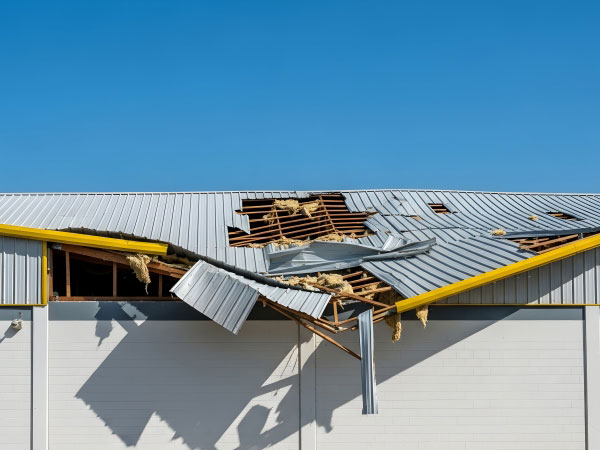
When a storm or other covered event may have damaged a commercial roof in Huber Heights, OH, the insurance process usually depends on clear documentation and a well-defined roofing scope. A roofing contractor can help document visible conditions and explain repair or restoration needs, but the insurance carrier determines coverage under the policy. A.H. Sturgill Roofing confirms Insurance Claims Support as part of its commercial service scope and serves Huber Heights within its approved Ohio service area.
Document Roof Conditions as Soon as It Is Safe
After a damaging event, begin with records that show what happened and what conditions were observed. Photos, videos, notes about the date of the event, interior water entry, affected equipment or inventory, and any emergency steps taken can help create a timeline for the claim.
Safety and damage mitigation come first. Do not delay temporary protection or other necessary measures simply to preserve a perfect photo record. If emergency work is needed, document the condition before and after the work when it is safe and practical to do so, and keep invoices, estimates, and related records.
Use Prior Inspection and Maintenance Records as Context

Earlier roof records can help show what was known before the event. A prior commercial roof inspection, maintenance report, repair invoice, or photo set may help distinguish newly observed damage from conditions that were already documented.
Those records do not determine whether the insurer will approve a claim. Coverage depends on the policy, the reported event, the insurer’s investigation, and other claim-specific facts. The practical goal is to give everyone reviewing the claim a clearer picture of the roof before and after the reported damage.
Understand the Contractor’s Role During the Claim
A roofing contractor can inspect the roof, identify visible damage, document roofing conditions, and prepare a repair, restoration, or replacement scope when appropriate. The contractor can also explain roof-system details that may be relevant during an on-site inspection with the insurer or adjuster.
That role should stay separate from interpreting insurance coverage. A roofing contractor does not decide whether a loss is covered, how much the insurer must pay, or how policy language should be applied. Questions about coverage, deductibles, limits, exclusions, notice requirements, or claim settlement should be directed to the insurer, agent, or an appropriate licensed professional.
Compare the Insurance Scope With the Roofing Scope
The insurer’s estimate and the contractor’s proposed roofing scope may not use the same wording or include the same work. Property owners should compare them carefully instead of assuming that one automatically matches the other.
A useful roofing proposal should identify the observed condition, the recommended work, materials or system involved, preparation requirements, major inclusions and exclusions, and any conditions that could change the scope. If the owner wants upgrades or additional work beyond the damage being claimed, those items should be separated clearly so the insurance portion and owner-elected portion are not confused.
Keep Records as the Project Changes
Roof work sometimes reveals concealed conditions that were not visible during the first inspection. When that happens, document what was found and how the proposed work changes. Keep revised estimates, photographs, invoices, change orders, correspondence, and completion records together.
If the insurer asks for additional documentation, the owner should confirm exactly what is required and by when. Requirements can vary by policy and carrier, so a generic roofing checklist should not be treated as a substitute for the insurer’s actual instructions.
Know When Repair, Restoration, or Replacement Needs Evaluation
Storm damage does not automatically mean the roof must be replaced. Localized damage may support a targeted repair if the surrounding roof remains serviceable. Restoration may be worth evaluating when the existing system is compatible and the required repairs and preparation are practical. Replacement may be considered when damage is broader or existing conditions limit other options.
A.H. Sturgill Roofing’s commercial repairs and restoration services provide relevant context for comparing those roofing options. The appropriate recommendation should come from the roof’s actual condition, not from the existence of an insurance claim alone.
Prepare for the On-Site Claim Inspection
Before an insurer or adjuster visits, gather the claim number, known damage locations, prior inspection records, emergency-repair documentation, and any contractor findings already available. Make sure roof access can be coordinated safely if an inspection is planned.
If the roofing contractor will attend, confirm that arrangement in advance. The contractor can point out roofing details and answer technical questions about the system, but the insurer or adjuster remains responsible for the carrier’s claim evaluation.
Insurance Claims Support in Huber Heights, OH
A.H. Sturgill Roofing provides Insurance Claims Support for commercial roofing clients and serves Huber Heights within its approved service area. The company’s confirmed commercial scope also includes roof coatings and restoration, TPO, PVC, and EPDM single-ply installation, standing seam metal roofing, skylight work, and general commercial roofing.
If your commercial roof has possible storm damage, contact A.H. Sturgill Roofing or call (937) 254-2955 to discuss an inspection and roofing documentation for the claim.
Frequently Asked Questions
What should I document after possible storm damage to a commercial roof?
Document visible roof and interior conditions, the date of the event, emergency measures, and related invoices or estimates when it is safe to do so.
Should I provide prior roof inspection records to the insurer?
They can provide useful context about pre-event roof conditions. Confirm with the insurer which records are requested for the specific claim.
Can my roofing contractor decide whether insurance will cover the damage?
No. The contractor can document roofing conditions and prepare a scope, but the insurer determines coverage under the policy.
What if the contractor’s scope differs from the insurer’s estimate?
Compare the documents item by item and clarify differences in observed conditions, quantities, materials, or included work before authorizing the project.