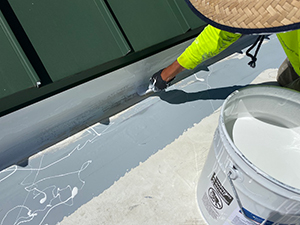
Commercial roof repairs in Springfield, OH should be scoped from evidence, not from the first visible stain or damaged spot. A localized seam, flashing, penetration, or membrane defect may support a targeted repair when the surrounding roof remains serviceable. Repeated leaks, damage in several areas, or moisture extending into insulation or decking can justify a broader roof assessment before more repair work is authorized.
A.H. Sturgill Roofing provides commercial repair and restoration services in Ohio and serves Springfield. For a building owner, the useful first step is to identify the source and extent of the problem, document what the repair includes, and understand what conditions would change the scope.
Why Timely Roof Repairs Matter
Active leaks and visible roof damage deserve prompt evaluation because water can spread beyond the point where it enters. Interior symptoms may appear some distance from the actual defect, and a small opening can affect insulation, ceilings, equipment, or finishes if it remains unaddressed.
The response should still match the evidence. An isolated defect does not automatically mean the whole roof needs replacement, and one ceiling stain does not prove that damage is limited to the area directly above it. A repair plan should connect interior symptoms with roof-surface conditions and any moisture evidence discovered during inspection.
Common Commercial Roof Repair Conditions

Commercial repair work can involve membrane punctures, open seams, flashing defects, failed sealant, penetration details, drainage-related damage, or localized deterioration around prior repairs. The important question is not simply which symptom is present, but how much of the surrounding roof is affected.
A.H. Sturgill Roofing’s commercial repairs and restoration services include quoted repairs for specific roofing problems. The repair scope should identify the defect being addressed and distinguish it from broader conditions that require additional evaluation.
Repair or Broader Assessment: Reading the Evidence
The same symptom can lead to different scopes depending on how widespread it is and what the surrounding materials show. The table below separates conditions that may support a localized repair from evidence that calls for a broader assessment.
| Observed condition | May support localized repair | May require broader assessment |
|---|---|---|
| Seam separation | A limited seam defect with surrounding membrane still suitable for repair | Similar seam failures in multiple roof areas or seams that repeatedly reopen |
| Penetration or flashing leak | One defined defect at a curb, vent, wall, edge, or other detail | Several failing details or deterioration extending beyond the original repair area |
| Membrane damage | An isolated puncture, tear, or damaged section with serviceable material around it | Widespread cracking, repeated damage, or deterioration across several roof sections |
| Moisture extent | Evidence indicates the affected area is limited and can be defined within the repair scope | Moisture extends into insulation, decking, or several areas and the boundary is uncertain |
What a Localized Repair Quote Should Define
A repair quote should state the condition being repaired, the area included, the compatible repair materials or method, and important exclusions. If opening the roof reveals wet insulation, deteriorated decking, or a larger affected area than expected, that discovery should be documented and the additional work should be explained before the scope expands.
Access and investigation should be handled by trained roofing personnel. Building owners can document interior symptoms and operational impacts from safe areas, but rooftop diagnosis should not depend on untrained access or assumptions about what lies below the membrane.
When evidence points beyond one repair area, a commercial roof inspection in Springfield can provide a broader condition review before additional repairs are selected.
How Repair Work Should Be Closed Out
Closeout should confirm that the specified defect was addressed and identify any conditions that remain outside the repair scope. Useful documentation can include the repaired location, photos when provided, changes authorized during the work, and maintenance or monitoring recommendations for nearby areas.
A localized repair does not need to solve every issue on the roof to be successful. It should resolve the condition it was designed to address and make clear when another roof area needs separate investigation or future work.
The Role of Preventative Maintenance
Repair history becomes more useful when it is tracked over time. Repeated work in the same area, recurring drainage problems, or defects appearing across several roof sections can change the owner’s next decision. A.H. Sturgill Roofing’s Roof Asset Management Program is designed around condition tracking, inspections, immediate recommendations, and planning for maintenance, restoration, or future replacement.
Commercial Roof Repairs in Springfield, OH
The decision between a localized repair and a broader assessment should come from the extent and pattern of evidence. One repairable defect may need a defined repair scope. Repeated failures, widespread deterioration, or uncertain moisture can justify a more complete evaluation before additional work is approved.
Contact A.H. Sturgill Roofing at (937) 254-2955 to discuss commercial roof repair needs in Springfield, OH.
Frequently Asked Questions
How quickly should a commercial roof problem be evaluated?
Active leaks, visible damage, or conditions affecting building operations should be evaluated promptly. The appropriate repair scope still depends on the source and extent of the damage.
How can a difficult roof leak be traced?
The investigation should compare interior symptoms with seams, flashing, penetrations, drainage, membrane condition, and other likely entry points rather than assuming the leak is directly above the stain.
How can I tell if the roof needs a localized repair or a broader assessment?
A defined defect with serviceable surrounding materials may support repair. Repeated leaks, several failing areas, widespread deterioration, or uncertain moisture extent support a broader assessment before more work is scoped.
What should be documented after a commercial roof repair?
Closeout should identify the repaired area, any authorized scope changes, important findings, and any roof conditions that still need monitoring, maintenance, or separate evaluation.